






Aux 1 Unit 11 Main Propulsion Shaft Quiz

3

Aux 1 Unit 11 Q1

1 / 10

After the coupling is removed, what should be done with the hydraulic sleeve?

2 / 10

What should be done after the hydraulic sleeve has been expanded and loosened from the shaft?

3 / 10

Once hydraulic pressure is relieved, what is typically done next to facilitate the removal of the coupling?

4 / 10

What additional check is often used to ensure the push fit of a hydraulic sleeve-type coupling is complete?

5 / 10

During the reassembly of a hydraulic sleeve-type coupling, how is it typically determined that the push fit is complete?

6 / 10

What safety precautions should be taken during the removal of a hydraulic sleeve-type coupling?

7 / 10

Why is it important to use a hydraulic puller when removing the coupling?

8 / 10

How is the hydraulic oil typically injected into the sleeve to facilitate the removal of the coupling?

9 / 10

What role does hydraulic pressure play in determining the completion of the push fit during reassembly?

10 / 10

What is the first step in the removal procedure of a hydraulic sleeve-type coupling on a main propulsion shaft?

1

Aux 1 Unit 11 Q2

1 / 10

What is one method used to determine that the push fit is complete in a hydraulic sleeve-type coupling?

2 / 10

What additional check can be performed to ensure that the push fit is fully completed?

3 / 10

How is the final torque of the coupling bolts verified after completing the tightening procedure?

4 / 10

Why is it important to release the hydraulic pressure gradually during the tightening process?

5 / 10

What should be done if the coupling does not seat properly after releasing the hydraulic pressure?

6 / 10

How can hydraulic pressure be used to confirm that the push fit of the coupling is complete?

7 / 10

What should be done after the coupling sleeve is expanded and the coupling is positioned correctly?

8 / 10

How is the hydraulic pressure applied during the tightening procedure?

9 / 10

Once the coupling surfaces are prepared, what is the next step in the tightening procedure?

10 / 10

What is the first step in the tightening procedure for a hydraulic sleeve-type coupling on a main propulsion shaft?

3

Aux 1 Unit 11 Q3

1 / 7

What is a potential corrosion-related disadvantage of water-lubricated stern tube bearings, and how can it be overcome?

2 / 7

What cost-related advantage do water-lubricated stern tube bearings offer compared to oil-lubricated bearings?

3 / 7

What is a potential wear-related disadvantage of water-lubricated stern tube bearings compared to oil-lubricated bearings?

4 / 7

How can the issue of reduced lubrication efficiency in water-lubricated bearings be addressed to ensure reliable operation?

5 / 7

How do water-lubricated stern tube bearings impact maintenance requirements compared to oil-lubricated bearings?

6 / 7

What is a performance-related disadvantage of water-lubricated stern tube bearings compared to oil-lubricated bearings?

7 / 7

What is one environmental advantage of using water-lubricated stern tube bearings compared to oil-lubricated bearings?

2

Aux 1 Unit 11 Q4

1 / 10

If the bearing condition worsens and temperatures rise to a critical level, what should be done?

2 / 10

If the bearing temperature stabilizes but remains higher than normal, what should be the next course of action?

3 / 10

What effect could excessive bearing load have on the bearing temperature?

4 / 10

What role could bearing wear or damage play in causing an intermediate shaft bearing to run hot?

5 / 10

What is one possible cause of an intermediate shaft bearing running hot?

6 / 10

How could shaft misalignment contribute to an intermediate shaft bearing running hot?

7 / 10

How might contamination in the bearing lubricant contribute to the bearing running hot?

8 / 10

What should be monitored continuously after taking initial action to reduce the bearing temperature?

9 / 10

What precautionary measure should be taken during the voyage to port if the bearing is running hot?

10 / 10

What is the first action to take if an intermediate shaft bearing is running hot while at sea?

3

Aux 1 Unit 11 Q5

1 / 10

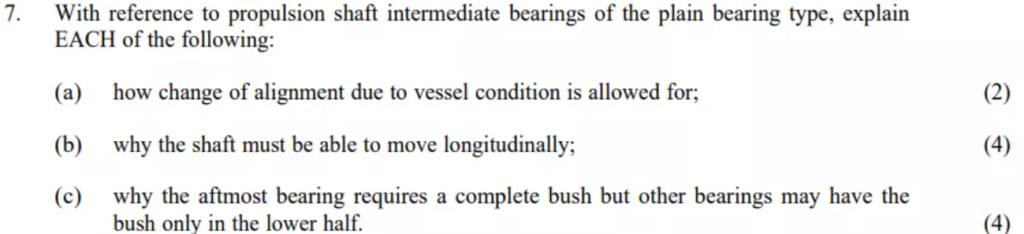
What is a key reason why other intermediate bearings may only have the bush in the lower half?

2 / 10

Why is it important for the propulsion shaft to be able to move longitudinally within its bearings?

3 / 10

What would be the consequence of not having a complete bush in the aftmost bearing?

4 / 10

Why might thermal expansion of the shaft be a concern in a marine propulsion system?

5 / 10

What could happen if the propulsion shaft is not allowed to move longitudinally?

6 / 10

What type of bearing design feature helps accommodate alignment changes in a vessel?

7 / 10

How do plain bearings accommodate changes in alignment due to varying vessel conditions, such as loading or flexing of the hull?

8 / 10

What feature in a plain bearing system allows for longitudinal movement of the shaft?

9 / 10

Why does the aftmost bearing in a propulsion shaft system require a complete bush?

10 / 10

How does the design of the aftmost bearing help to prevent shaft misalignment as the shaft exits the vessel?

2

Aux 1 Unit 11 Q6

1 / 10

What is one major advantage of using white metal in stern bearings?

2 / 10

What is a disadvantage of using white metal in stern bearings?

3 / 10

How does the thermal conductivity of white metal impact its performance as a stern bearing material?

4 / 10

What is a potential maintenance-related disadvantage of white metal stern bearings?

5 / 10

What is an advantage of using plastic materials in stern bearings?

6 / 10

How does the self-lubricating property of certain plastic materials benefit stern bearings?

7 / 10

What is a disadvantage of using plastic materials in stern bearings under high-load conditions?

8 / 10

How does the thermal expansion of plastic materials impact their use in stern bearings?

9 / 10

What could be a cost-related disadvantage of using plastic materials in stern bearings?

10 / 10

Why is white metal commonly used in high-load applications for stern bearings?

1

Aux 1 Unit 11 Q7

1 / 10

What is a key component of a typical flexible coupling used in a main propulsion drive?

2 / 10

In a main propulsion drive, why might a flexible coupling be preferred over a rigid coupling?

3 / 10

Why is a flexible coupling used in propulsion drives to handle shaft misalignment?

4 / 10

Which type of flexible coupling is commonly used in marine propulsion systems for its ability to handle large torque loads and accommodate misalignment?

5 / 10

Which of the following best describes a flexible coupling used in a main propulsion drive?

6 / 10

What material is often used in the flexible element of a coupling to ensure durability and flexibility in marine environments?

7 / 10

How does a flexible coupling reduce the transmission of vibrations from the engine to the propulsion shaft?

8 / 10

What is the primary function of the flexible element in a flexible coupling?

9 / 10

How does a flexible coupling contribute to the reduction of vibration in a propulsion drive?

10 / 10

What is another reason for using a flexible coupling in a marine propulsion drive related to shock loads?

0

Aux 1 Unit 11 Q8

1 / 10

How does the complete bush in the aftmost bearing help to prevent misalignment as the shaft exits the vessel?

2 / 10

What could happen if the propulsion shaft is not allowed to move longitudinally within the bearings?

3 / 10

What design feature is commonly used in plain bearings to allow for alignment changes due to vessel conditions?

4 / 10

What would be the consequence of not having a complete bush in the aftmost bearing?

5 / 10

What is the primary reason why intermediate bearings may only have a bush in the lower half?

6 / 10

Why does the aftmost bearing in a propulsion shaft system require a complete bush?

7 / 10

Why is it important for the propulsion shaft to be able to move longitudinally within its plain bearings?

8 / 10

How do propulsion shaft intermediate plain bearings accommodate changes in alignment due to varying vessel conditions, such as loading or hull flexing?

9 / 10

Which of the following best explains how a plain bearing system allows for longitudinal movement of the propulsion shaft?

10 / 10

In what scenario would longitudinal movement of the propulsion shaft be most critical?

0

Aux 1 Unit 11 Q9

1 / 10

What design feature in roller-type bearings allows for the accommodation of angular misalignment in the shaft?

2 / 10

How does the design of the roller bearing's raceways contribute to handling angular misalignment?

3 / 10

Which type of roller bearing is specifically designed to accommodate angular misalignment in a propulsion system?

4 / 10

What is the primary advantage of using spherical roller bearings in accommodating angular misalignment?

5 / 10

If angular misalignment is not properly accommodated in a roller bearing, what is the likely consequence?


6 / 10

How is longitudinal movement of the shaft typically accommodated in a roller-type bearing?

7 / 10

What feature in a roller bearing allows for axial (longitudinal) movement of the shaft?

8 / 10

What is the primary reason for allowing longitudinal movement of the shaft within its bearings?

9 / 10

How does a floating bearing differ from a fixed bearing in terms of accommodating shaft movement?

10 / 10

What could be a potential consequence if the shaft's longitudinal movement is not properly accommodated in a roller bearing system?

0

Aux 1 Unit 11 Q10

1 / 10

What should be checked for when inspecting the thrust pads of a main thrust bearing?

2 / 10

What is the significance of checking the alignment of the thrust bearing during inspection?

3 / 10

Why is it important to document the findings of a thrust bearing inspection?

4 / 10

What is the role of vibration analysis in the inspection of a main thrust bearing?

5 / 10

What should be done if excessive wear is detected on the thrust bearing during inspection?

6 / 10

How often should the main thrust bearing be inspected as part of a vessel's maintenance schedule?

7 / 10

Why is it important to inspect the oil grooves in a main thrust bearing during an inspection?

8 / 10

What is the primary purpose of inspecting a main thrust bearing in a marine engine?

9 / 10

What is the first step in inspecting a main thrust bearing?

10 / 10

During the inspection of a main thrust bearing, which tool is commonly used to measure the clearance between the thrust pads and the collar?

0

Aux 1 Unit 11 Q11

1 / 10

Why is it important to achieve the correct tension in hydraulically tensioned bolts?

2 / 10

What final inspection should be conducted after the fitting of hydraulically tensioned bolts?

3 / 10

What is the role of the hydraulic tensioner during the fitting of the bolt?

4 / 10

What is the first step in the fitting process of a hydraulically tensioned bolt for main propulsion shaft flanges?

5 / 10

What is the purpose of applying hydraulic pressure to a tensioning tool during the bolt fitting process?

6 / 10

After the nut is tightened and the hydraulic pressure is released, what should be checked to ensure proper fitting of the bolt?

7 / 10

Why might hydraulic tensioning be preferred over traditional torque methods for securing bolts on a main propulsion shaft flange?

8 / 10

Once the bolt has been elongated using hydraulic pressure, what is the next step in the fitting process?

9 / 10

What should be done if the correct tension is not achieved during the initial fitting of the bolt?

10 / 10

What safety precautions should be taken during the fitting of a hydraulically tensioned bolt?

0

Aux 1 Unit 11 Q12

1 / 10

What is the primary function of the aft seal in an oil-lubricated stern tube bearing?

2 / 10

What is the purpose of the water cooling system often found in conjunction with the aft seal arrangement?

3 / 10

Why is it important to monitor the condition of the aft seal in an oil-lubricated stern tube bearing?

4 / 10

How is the aft seal assembly typically lubricated?

5 / 10

What material is commonly used for the lip seals in an aft seal arrangement?

6 / 10

What type of seal is commonly used for the aft seal in an oil-lubricated stern tube bearing?

7 / 10

What additional component might be included in the aft seal arrangement to protect the seal from damage caused by debris or fishing lines?

8 / 10

How is the aft seal typically arranged in relation to the propeller shaft?

9 / 10

What maintenance procedure is typically performed to ensure the aft seal remains effective?

10 / 10

What could be a potential consequence of a failed aft seal in an oil-lubricated stern tube bearing?

0

Aux 1 Unit 11 Q14

1 / 10

What is the primary purpose of checking the alignment of a propeller transmission shaft system?

2 / 10

Which tool is commonly used to measure the alignment of a propeller shaft?

3 / 10

How is the alignment of a propeller shaft typically checked using a dial gauge?

4 / 10

What is the purpose of checking the alignment of the propeller shaft with the bearings?

5 / 10

Why is it important to check the alignment of the propeller shaft after installation or major maintenance work?

6 / 10

What is a common method to confirm that the propeller shaft alignment is within acceptable limits?

7 / 10

Why might laser alignment be preferred over traditional methods for checking shaft alignment?

8 / 10

What might be the consequence of failing to properly align a propeller shaft?

9 / 10

What is one of the primary indications of a high bearing when the shaft is running?

10 / 10

What other indication might suggest that a bearing is running high?

0

Aux 1 Unit 11 Q15

1 / 10

Why are hydraulically fitted bolts generally preferred in high-stress applications compared to interference fit bolts?

2 / 10

Why might hydraulically fitted bolts be considered more cost-effective in the long term compared to interference fit bolts?

3 / 10

How do hydraulically fitted bolts affect the alignment of the shaft and coupling compared to interference fit bolts?

4 / 10

In terms of operational reliability, why might hydraulically fitted bolts be preferred over interference fit bolts?

5 / 10

What is an advantage of using hydraulically fitted bolts regarding the risk of damaging the coupling during installation?

6 / 10

What advantage do hydraulically fitted bolts offer in terms of the force required for installation?

7 / 10

What impact do hydraulically fitted bolts have on the need for re-machining or reworking of components?

8 / 10

What is one major advantage of using hydraulically fitted shaft coupling bolts compared to parallel, interference fit bolts?

9 / 10

How does the use of hydraulically fitted shaft coupling bolts improve the safety of the installation process?

10 / 10

What is an advantage of using hydraulically fitted bolts in terms of maintenance and servicing?






