



Aux 1 Unit 8 Hydraulic Control Systems Quiz

5

Aux 1 Unit 8 Q1

1 / 10

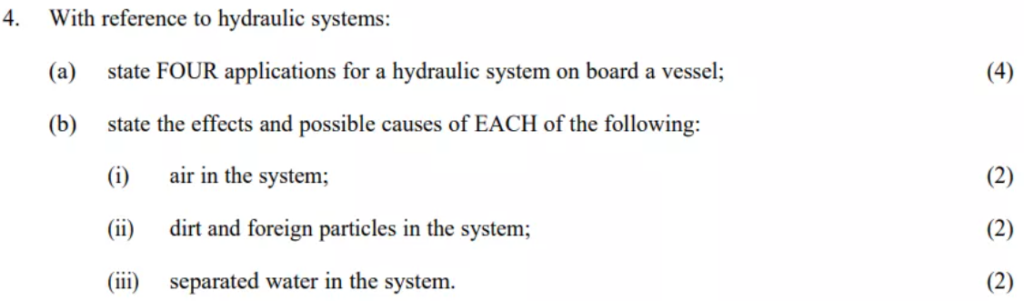
What is another application of hydraulic systems on board vessels?

2 / 10

What is a common cause of water entering and separating within a hydraulic system?

3 / 10

What effect do dirt and foreign particles have on a hydraulic system?

4 / 10

What is a likely cause of dirt and foreign particles entering a hydraulic system?

5 / 10

What effect can separated water have on a hydraulic system?

6 / 10

Which of the following is a common application of a hydraulic system on board a vessel?

7 / 10

Which of the following is an application of hydraulic systems on a vessel related to engine operation?

8 / 10

What is a common cause of air entering a hydraulic system?

9 / 10

What is a potential effect of air being present in a hydraulic system?

10 / 10

Hydraulic systems on vessels are also commonly used for which of the following?

1

Aux 1 Unit 8 Q2

1 / 8

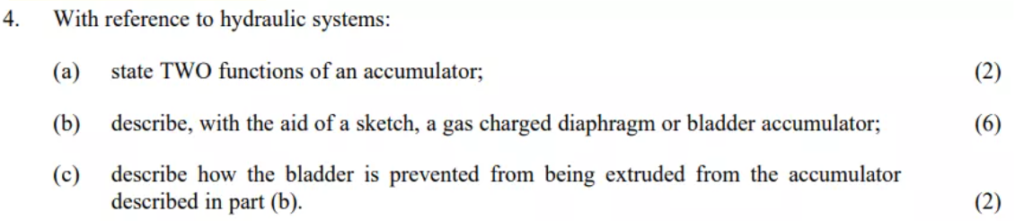
How is the bladder in a gas-charged accumulator typically prevented from being extruded through the fluid port?

2 / 8

Which component in a gas-charged bladder accumulator separates the hydraulic fluid from the gas?

3 / 8

Why is it critical to prevent the bladder in an accumulator from being extruded?

4 / 8

What gas is typically used in a gas-charged bladder accumulator?

5 / 8

What is one primary function of an accumulator in a hydraulic system?

6 / 8

How does a gas-charged bladder accumulator operate when there is a drop in hydraulic system pressure?

7 / 8

What is another key function of a hydraulic accumulator?

8 / 8

Which part of the accumulator typically houses the gas charge?

0

Aux 1 Unit 8 Q3

1 / 10

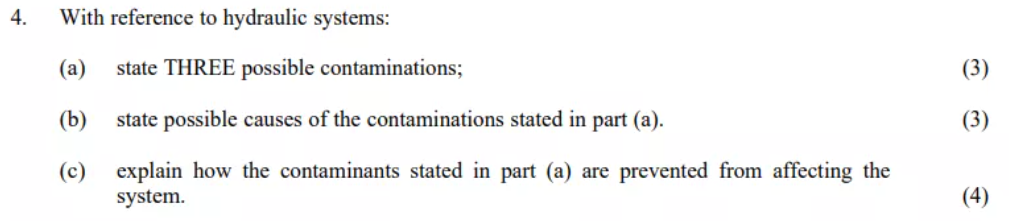
What is a common method to prevent dust and dirt particles from contaminating a hydraulic system?

2 / 10

What is a typical cause of dust and dirt particles contaminating a hydraulic system?

3 / 10

What is another possible contaminant in a hydraulic system that can cause corrosion?

4 / 10

How can water contamination be prevented in a hydraulic system?

5 / 10

How can water contamination typically occur in a hydraulic system?

6 / 10

Which of the following contaminants can lead to wear and damage in a hydraulic system?

7 / 10

What is the purpose of using desiccant breathers on hydraulic reservoirs?

8 / 10

What is a common cause of air bubbles entering a hydraulic system?

9 / 10

How can air bubbles be prevented from affecting a hydraulic system?

10 / 10

Which of the following is a common type of contamination in a hydraulic system?

0

Aux 1 Unit 8 Q4

1 / 10

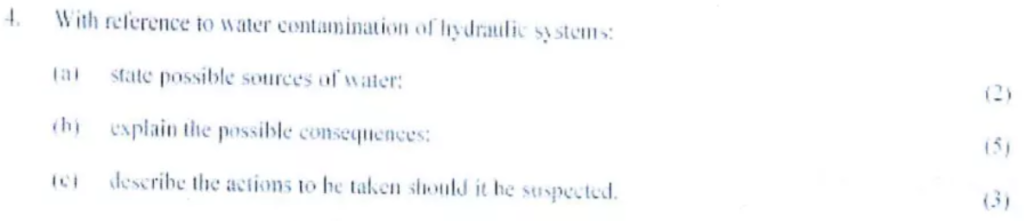
Which of the following is a common source of water contamination in hydraulic systems?

2 / 10

How can water ingress occur through external sources in a hydraulic system?

3 / 10

What is a potential consequence of water contamination in a hydraulic system?

4 / 10

How does water contamination affect the hydraulic fluid's ability to lubricate?

5 / 10

What is the impact of water contamination on the hydraulic system's efficiency?

6 / 10

How can water contamination lead to system malfunctions in a hydraulic system?

7 / 10

What might be the long-term effect of water contamination in a hydraulic system if left unchecked?

8 / 10

What is the first action to take if water contamination is suspected in a hydraulic system?

9 / 10

What should be done to confirm the presence of water contamination in a hydraulic system?

10 / 10

After confirming water contamination in a hydraulic system, what is an appropriate action to take?

0

Aux 1 Unit 8 Q5

1 / 10

What should be done with used hydraulic fluid during maintenance?

2 / 10

What should be done to identify potential hazards in the hydraulic system before maintenance?

3 / 10

Why should all hydraulic hoses and connections be inspected before starting maintenance?

4 / 10

Why should hydraulic fluid be handled carefully during maintenance?

5 / 10

What is the recommended action if a hydraulic system leak is suspected during operation?

6 / 10

Why is it important to isolate the hydraulic power source before beginning repairs or maintenance?

7 / 10

Which personal protective equipment (PPE) is essential when working on hydraulic systems?

8 / 10

What should be done if a hydraulic component is found to be under pressure during maintenance?

9 / 10

What is the purpose of locking out and tagging out (LOTO) the hydraulic system before maintenance?

10 / 10

What is the first safety precaution that should be taken before starting any maintenance or repair on a hydraulic system?

0

Aux 1 Unit 8 Q6

1 / 10

What should be done to prevent the introduction of contaminants during hydraulic system maintenance?


2 / 10

What is another common contaminant found in hydraulic systems on board vessels?

3 / 10

Why is it important to regularly inspect and maintain hydraulic filters?

4 / 10

What is a recommended method to remove air bubbles from a hydraulic system?

5 / 10

Which of the following is a common contaminant that can affect the cleanliness of a hydraulic system?

6 / 10

How can metal particles and sludge, introduced by degraded hydraulic fluid, be eliminated from the system?

7 / 10

What is an effective step to eliminate water contamination in a hydraulic system?

8 / 10

Which contaminant can cause cavitation and spongy operation in a hydraulic system?

9 / 10

What type of contaminant is introduced by degraded hydraulic fluid?

10 / 10

How can dirt and dust particles be effectively eliminated from a hydraulic system?

0

Aux 1 Unit 8 Q7

1 / 10

What is the effect on the torque of the windlass if the flow rate of hydraulic oil is reduced, assuming the load remains constant?

2 / 10

What is a potential drawback of increasing the flow rate of hydraulic oil too much?

3 / 10

How does reducing the displacement of the motor affect the speed of the windlass, assuming the hydraulic flow rate remains constant?

4 / 10

What could be a consequence of setting the motor displacement too low for a heavy load on the windlass?

5 / 10

Why is it beneficial to have a variable displacement motor in a hydraulically operated windlass?

6 / 10

How does increasing the flow rate of hydraulic oil affect the responsiveness of the windlass?

7 / 10

What happens to the torque output of the motor if the displacement of the motor is increased?

8 / 10

If the motor displacement is reduced while maintaining the same load, what happens to the required pressure in the hydraulic system?

9 / 10

What is the effect of increasing motor displacement on the hydraulic system's efficiency?

10 / 10

What happens to the speed of the windlass if the flow rate of hydraulic oil is increased?

0

Aux 1 Unit 8 Q8

1 / 10

Which method would be most suitable for applications requiring frequent changes in motor speed and load?

2 / 10

What could be a potential drawback of using a variable displacement pump for speed control?

3 / 10

How does a variable displacement pump improve the energy efficiency of a hydraulic system?

4 / 10

What is a key advantage of using a variable displacement pump for controlling motor speed compared to a flow control valve?

5 / 10

How does decreasing the displacement of a variable displacement pump affect the hydraulic motor’s speed?

6 / 10

What is another effective method for controlling the speed of a hydraulic motor?

7 / 10

Why might an operator prefer to use a flow control valve for speed control in a hydraulic system?

8 / 10

What is a potential downside of using a flow control valve to regulate motor speed?

9 / 10

How does reducing the flow rate of hydraulic fluid using a flow control valve affect the speed of the hydraulic motor?

10 / 10

Which of the following is a common method for controlling the speed of a hydraulic motor?