





Aux 1 Unit 7 Pneumatic Control Systems Quiz

1

Aux 1 Unit 7 Q1

1 / 6

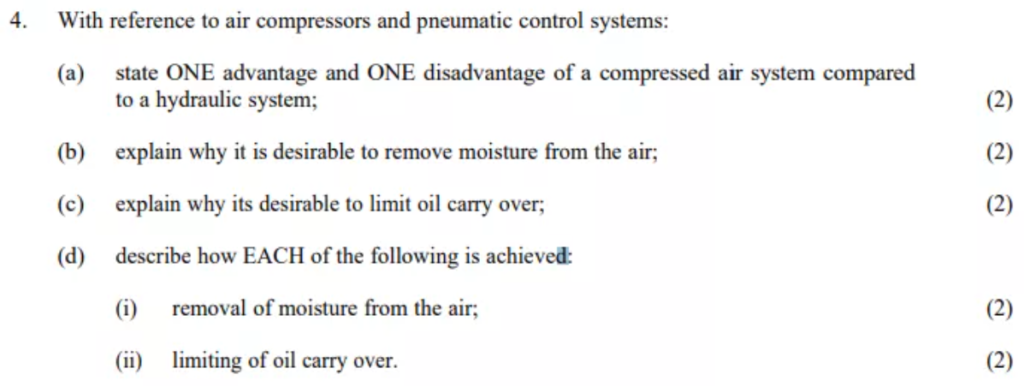
What could happen if moisture is not removed from the air in a pneumatic control system?

2 / 6

What is a disadvantage of a compressed air system compared to a hydraulic system?

3 / 6

What is an advantage of a compressed air system compared to a hydraulic system?

4 / 6

What is a potential consequence of excessive oil carryover in a pneumatic control system?

5 / 6

Why is it desirable to limit oil carryover in a compressed air system?

6 / 6

Why is it important to remove moisture from the air in a compressed air system?

2

Aux 1 Unit 7 Q2

1 / 7

What is another advantage of using air in pneumatic systems?

2 / 7

What is the advantage of using air in pneumatic systems regarding environmental impact?

3 / 7

Which of the following is an advantage of using air as a pneumatic medium?

4 / 7

Why might air be less suitable for high-power applications compared to hydraulic systems?

5 / 7

What is a disadvantage of using air as a pneumatic medium related to system performance?

6 / 7

Why is the low cost of air considered an advantage in pneumatic systems?

7 / 7

What is a significant disadvantage of using air in pneumatic systems due to its compressibility?

0

Aux 1 Unit 7 Q3

1 / 8

What could happen in a pneumatic system without an accumulator to maintain pressure during peak demand?

2 / 8

What potential problems might occur in a pneumatic control system without an accumulator acting as a shock absorber?

3 / 8

Why is it important for an accumulator to store compressed air and maintain pressure during peak demand in a pneumatic control system?

4 / 8

Why is it essential to maintain the proper operation of an accumulator in a pneumatic control system?

5 / 8

What is the second main purpose of an accumulator in a pneumatic control system?

6 / 8

How does the use of an accumulator improve the overall efficiency of a pneumatic control system?

7 / 8

Why is the shock-absorbing function of an accumulator critical in pneumatic control systems?

8 / 8

What is one of the main purposes of an accumulator in a pneumatic control system?

0

Aux 1 Unit 7 Q4

1 / 10

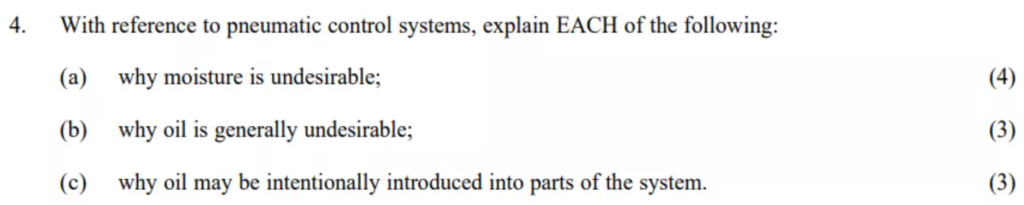
Why is moisture considered undesirable in a pneumatic control system?

2 / 10

In which part of a pneumatic system is oil most commonly introduced?

3 / 10

Why might oil in the compressed air be a concern for the overall pneumatic system's cleanliness?

4 / 10

Why might oil be intentionally introduced into parts of a pneumatic control system?

5 / 10

What is a potential consequence of moisture freezing within a pneumatic control system?

6 / 10

Why is it important to remove moisture from compressed air in pneumatic systems?

7 / 10

What is a potential consequence of oil carryover in pneumatic systems?

8 / 10

Why is oil generally undesirable in a pneumatic control system?

9 / 10

How does moisture in the air affect the performance of pneumatic control valves?

10 / 10

What is a potential benefit of introducing oil into specific parts of a pneumatic system?

1

Aux 1 Unit 7 Q5

1 / 7

Which contaminant in an air supply for pneumatic control systems can degrade seals and cause system malfunctions?

2 / 7

Why is it important to filter out contaminants such as moisture, dust, and oil mist from the air supply in pneumatic control systems?

3 / 7

Which contaminant in a pneumatic control system's air supply can lead to clogging and damage of system components?

4 / 7

Why is moisture (water vapor) undesirable in a pneumatic control system?

5 / 7

Which of the following is a common contaminant that may be present in an air supply for pneumatic control systems?


6 / 7

Why are dust and dirt particles considered undesirable in a pneumatic control system?

7 / 7

How does the presence of oil mist in the air supply affect a pneumatic control system?

0

Aux 1 Unit 7 Q6

1 / 10

Which of the following is a method used to achieve clean, dry air in a pneumatic system?

2 / 10

What is the risk of using air that is not clean in a pneumatic control system?

3 / 10

Why is it important to have a supply of clean, dry air in a pneumatic control system?

4 / 10

Why is it particularly important to have dry air in applications where pneumatic systems operate in cold environments?

5 / 10

How does a refrigerated air dryer work to achieve clean, dry air in a pneumatic system?

6 / 10

What is a key benefit of maintaining a supply of clean, dry air in a pneumatic control system?

7 / 10

How does moisture in the air affect pneumatic control valves?

8 / 10

What is the primary function of an air dryer in a pneumatic control system?

9 / 10

Which type of filter is commonly used to remove solid particles from the air in a pneumatic system?

10 / 10

What role does an air filter play in ensuring a supply of clean air in a pneumatic control system?

1

Aux 1 Unit 7 Q7

1 / 10

What is a potential advantage of using a refrigerated air dryer in a pneumatic system?

2 / 10

Which method of drying compressed air is typically more energy-efficient and requires less maintenance?

3 / 10

Which method of drying compressed air is more suitable for applications requiring extremely low moisture levels?

4 / 10

Which desiccant material is commonly used in desiccant air dryers for moisture removal?

5 / 10

Which of the following is a drawback of using a desiccant air dryer in a pneumatic system?

6 / 10

What is the primary function of a refrigerated air dryer in a pneumatic control system?

7 / 10

What is the primary function of a desiccant air dryer in a pneumatic control system?

8 / 10

What is a common application where a desiccant air dryer would be preferred over a refrigerated air dryer?

9 / 10

How does a refrigerated air dryer achieve moisture removal in compressed air?

10 / 10

What is a potential advantage of using a desiccant air dryer in a pneumatic system?

1

Aux 1 Unit 7 Q8

1 / 10

What is the importance of having a pressure-reducing valve in the air supply line to control air systems?

2 / 10

Which component within a pressure-reducing valve is responsible for sensing and responding to changes in downstream pressure?

3 / 10

Why is it essential to set the pressure-reducing valve to a specific pressure when supplying control air?

4 / 10

What could be a consequence of not using a pressure-reducing valve when supplying air from the main starting air supply to a control system?

5 / 10

What is the typical construction material for a pressure-reducing valve used in pneumatic control systems?

6 / 10

What is the primary function of a pressure-reducing valve in a pneumatic control system?

7 / 10

Why is it important to regularly maintain a pressure-reducing valve in a pneumatic control system?

8 / 10

How does a pressure-reducing valve maintain a consistent output pressure in a pneumatic system?

9 / 10

Which of the following is a typical feature of a pressure-reducing valve used for supplying control air?

10 / 10

How does the spring in a pressure-reducing valve contribute to its operation?

0

Aux 1 Unit 7 Q9

1 / 10

How does the compressibility of air benefit pneumatic systems?

2 / 10

How does the incompressibility of hydraulic fluid benefit control systems?

3 / 10

Why is the availability of air considered an advantage for pneumatic systems?

4 / 10

Why is simplicity and ease of maintenance considered an advantage of pneumatic systems?

5 / 10

Why is the ability to maintain constant force and speed considered an advantage of hydraulic systems?

6 / 10

What is an advantage of the speed of response in pneumatic systems?

7 / 10

What is one major advantage of using hydraulics in control systems?

8 / 10

What is one major advantage of using pneumatics in control systems?

9 / 10

What is an advantage of the energy efficiency of hydraulic systems?

10 / 10

What advantage does the high power-to-weight ratio of hydraulic systems provide?
