

CHIEF ENGINEER Unit 9 ILO Quiz

1

CHIEF ENGINEER Unit 9 Q1

1 / 8

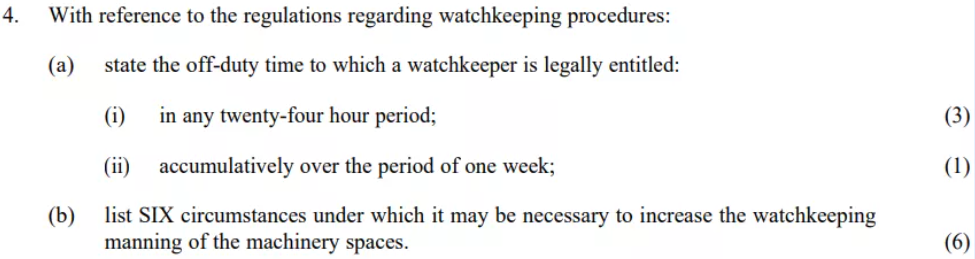
Which of the following circumstances may necessitate increased manning in machinery spaces on a vessel?

2 / 8

Under which of the following conditions might additional watchkeepers be required in the machinery spaces?

3 / 8

Which of the following is a circumstance where it may be necessary to increase the watchkeeping manning in machinery spaces?

4 / 8

How may the required 10 hours of rest in a 24-hour period be divided according to watchkeeping regulations?

5 / 8

When might increased watchkeeping in machinery spaces be necessary due to equipment condition?

6 / 8

Why might increased watchkeeping be necessary during maneuvering operations?

7 / 8

According to watchkeeping regulations, how many hours of rest is a watchkeeper entitled to in any twenty-four hour period?

8 / 8

What is the minimum cumulative rest time required over a seven-day period for a watchkeeper?

0

CHIEF ENGINEER Unit 9 Q2

1 / 10

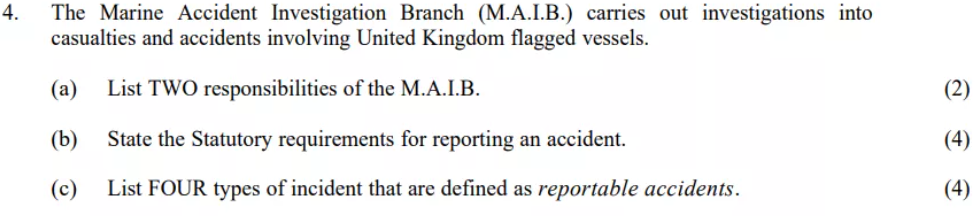
According to statutory requirements, who is responsible for reporting an accident involving a UK-flagged vessel?

2 / 10

Which of the following is considered a reportable incident under M.A.I.B. guidelines?

3 / 10

Which of the following is a primary responsibility of the M.A.I.B.?

4 / 10

Which of the following types of pollution would be classified as a reportable incident by the M.A.I.B.?


5 / 10

Under M.A.I.B. definitions, which of the following would be considered a “reportable accident”?

6 / 10

What information must be included in the initial accident report to the M.A.I.B.?

7 / 10

Which of the following is NOT considered a reportable incident according to the M.A.I.B.?

8 / 10

What is another responsibility of the M.A.I.B. besides investigating accidents?

9 / 10

What is the required timeframe for reporting a serious marine accident?

10 / 10

Which of the following incidents would require reporting to the M.A.I.B.?

0

CHIEF ENGINEER Unit 9 Q3

1 / 10

Which of the following is a key criterion for determining the composition of the engineering watch?

2 / 10

Why might the experience and qualifications of personnel influence the composition of the engineering watch?

3 / 10

Why is it important to inform the relieving officer about the location of the vessel at sea?

4 / 10

Which of the following should also be communicated to the relieving officer?

5 / 10

Which of the following items of information should be conveyed to the relieving officer before taking over the engineering watch?

6 / 10

How does the vessel’s location and operating conditions impact the engineering watch composition?

7 / 10

What must be conveyed to the relieving officer about alarms and the alarm system during the watch handover?

8 / 10

Which of the following is crucial to convey about the vessel’s power distribution system during the handover?

9 / 10

What information regarding ongoing maintenance should be conveyed to the relieving officer during the watch handover?

10 / 10

Which of the following would NOT typically influence the engineering watch composition?

0

CHIEF ENGINEER Unit 9 Q4

1 / 10

Under the MLC Convention, which of the following areas is regulated to protect seafarers’ rights?

2 / 10

Which of the following is NOT an area covered by the MLC Convention for workers at sea?

3 / 10

Which of the following areas is addressed by the MLC Convention to improve seafarers' welfare?

4 / 10

Which of the following is a focus area of the MLC Convention related to seafarers’ health?

5 / 10

Which of these ensures compliance with living and working conditions under the MLC?

6 / 10

Which of the following is NOT a purpose of the ILO?

7 / 10

What is a key objective of the ILO related to workers’ rights?

8 / 10

Under the MLC Convention, which area ensures the fair treatment of seafarers in employment terms?

9 / 10

Which of the following best describes how the ILO promotes the welfare of workers?

10 / 10

Which of the following best describes one of the main purposes of the International Labour Organisation (ILO)?