





Aux 2 Unit 9 Refrigerant Under/ re-charge, leaks, trouble shooting Quiz

7

Aux 2 Unit 9 Q1

1 / 7

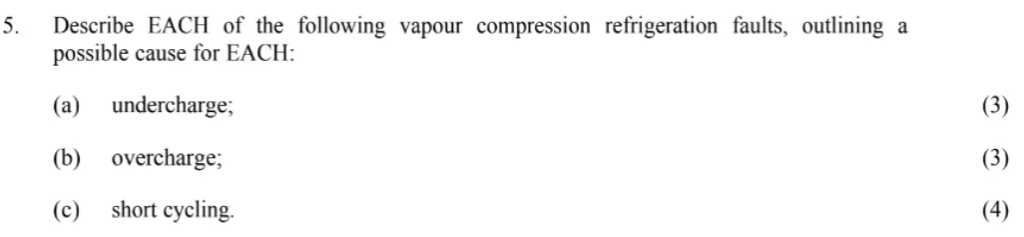
What is a possible cause of an undercharged refrigeration system?

2 / 7

What is a common cause of short cycling in a refrigeration system?

3 / 7

What is one effect of short cycling on a refrigeration system?

4 / 7

What is a common symptom of an undercharged refrigeration system?

5 / 7

What is a likely symptom of an overcharged refrigeration system?

6 / 7

What could be a potential cause of overcharging in a refrigeration system?

7 / 7

What is meant by "short cycling" in a refrigeration system?

6

Aux 2 Unit 9 Q2

1 / 6

What could lead to a refrigeration compressor stopping unexpectedly due to electrical issues?

2 / 6

Which of the following is a common reason for a refrigeration compressor to stop unexpectedly after running for a short period?

3 / 6

What fault could lead to a high pressure trip and stoppage of a refrigeration compressor?

4 / 6

Which of the following can result in the unexpected stoppage of a refrigeration compressor?

5 / 6

Which of the following could cause a refrigeration compressor to stop unexpectedly after running briefly?

6 / 6

What fault could result in a low pressure cut-out stopping the compressor?

5

Aux 2 Unit 9 Q3

1 / 7

What could happen if an undercharged system is not addressed promptly?

2 / 7

What is the first step in remedying an undercharged refrigeration system?

3 / 7

What should be done after repairing leaks in an undercharged refrigeration system?

4 / 7

Which of the following is a critical check after recharging a previously undercharged refrigeration system?

5 / 7

Which of the following is an indication of an undercharged refrigeration system?

6 / 7

What visual sign might indicate an undercharged system?

7 / 7

What is a common indication of an undercharged refrigeration system?


4

Aux 2 Unit 9 Q4

1 / 9

What step should be taken to ensure the refrigerant enters the system at the correct rate?

2 / 9

What should be done if the system shows signs of overcharging during the process?

3 / 9

At what point should the vapor charging hose be connected to the system?

4 / 9

Why is it necessary to check for leaks before re-charging a refrigeration plant?

5 / 9

How should the refrigerant cylinder be positioned during vapor re-charging?

6 / 9

What is the first step before starting the vapor re-charging of a refrigeration plant?

7 / 9

Why is it important to wear proper personal protective equipment (PPE) during the re-charging process?


8 / 9

What is the purpose of running the system briefly after the initial charge?

9 / 9

What should be monitored during the charging process to ensure proper system function?

6

Aux 2 Unit 9 Q5

1 / 7

Which of the following methods involves applying a soapy solution to refrigeration joints to find leaks?

2 / 7

Which method would be best for locating a leak in a system that cannot be opened or exposed easily?

3 / 7

How does the UV dye method help in detecting a refrigerant leak?

4 / 7

What is an advantage of using an electronic leak detector?

5 / 7

What is a characteristic of using an electronic leak detector to find a refrigerant leak?

6 / 7

What is a potential limitation of the bubble method for detecting refrigerant leaks?

7 / 7

Which of the following is a commonly used method for detecting a refrigerant gas leak?

4

Aux 2 Unit 9 Q6

1 / 10

What is a critical check to perform during the liquid charging process?

2 / 10

Before connecting the liquid charging hose, what should be done to ensure system safety?

3 / 10

What is the first safety step to take before beginning the liquid charging process of a refrigeration plant?

4 / 10

What should be done after the liquid charging is complete and the system is running?

5 / 10

Why must liquid charging be done slowly and carefully?

6 / 10

Why is it important to check the system for leaks before liquid charging?

7 / 10

What is one way to safely release excess refrigerant if the system is overcharged?

8 / 10

At what point should the liquid refrigerant be added to the system?

9 / 10

What type of protective gear is most important during the liquid charging process?

10 / 10

How should the refrigerant cylinder be positioned for liquid charging?

4

Aux 2 Unit 9 Q7

1 / 8

What is the main function of an oil separator in a refrigeration system?

2 / 8

What is another benefit of using an oil separator in a refrigeration system?

3 / 8

Which property of refrigeration oil helps prevent the formation of sludge and deposits?

4 / 8

What property of refrigeration oil is important for compatibility with refrigerants?

5 / 8

Which of the following is a key property of refrigeration oil?

6 / 8

Why is an oil separator used in vapor compression refrigeration systems?

7 / 8

How does an oil separator return separated oil to the compressor?

8 / 8

Where is an oil separator typically installed in a refrigeration system?

4

Aux 2 Unit 9 Q8

1 / 6

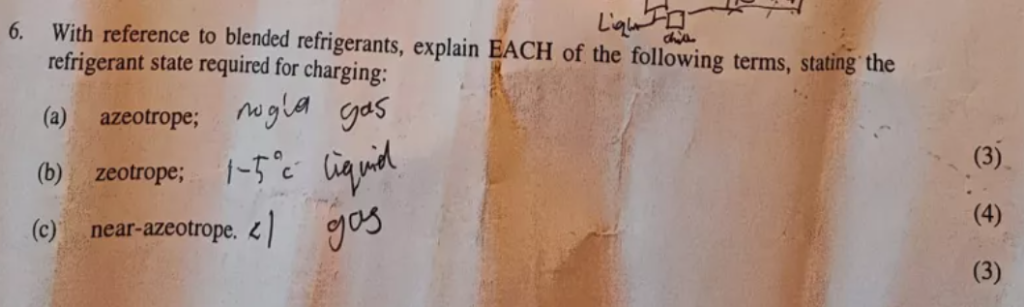
What is true about a near-azeotropic refrigerant blend?

2 / 6

What is a key feature of a zeotropic refrigerant blend?

3 / 6

What state should be used for charging a near-azeotropic refrigerant blend?

4 / 6

What state is recommended for charging an azeotropic refrigerant blend?

5 / 6

What is the characteristic of an azeotropic refrigerant blend?

6 / 6

What is the required state for charging a zeotropic refrigerant blend?

3

Aux 2 Unit 9 Q9

1 / 7

Why is air considered undesirable in a refrigeration system?

2 / 7

Which condition can lead to air being introduced into a refrigeration system?

3 / 7

What step should be taken after evacuating a refrigeration system with a vacuum pump?

4 / 7

What is a consequence of having air in the refrigeration system?

5 / 7

What is the most effective method for removing air from a refrigeration system?

6 / 7

Which of the following is a common way for air to enter a refrigeration system?

7 / 7

What tool is used to remove non-condensable gases from a refrigeration system during operation?

